The Premise, Side by Side
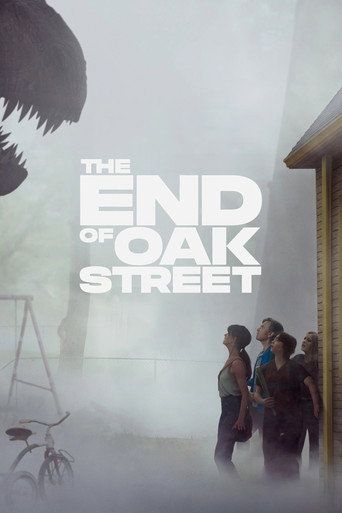
Here at Mockbusters.tv we love nothing more than lining up two movies that share a bone structure and pretending — with a wink — that the cheaper one got there first. Today's exhibit: Jurassic Rampage, the story of dinosaurs busting loose from an armored truck into a quiet neighborhood, and The End of Oak Street, 2026's big-ticket saga about a suburban street that gets physically removed from reality and dropped somewhere with no rules at all.
On paper, the connective tissue is thin, and we'll admit that up front: one film is a truck-based dino outbreak, the other is a metaphysical relocation event. But strip away the scale and the special-effects budget, and both movies boil down to the same primal engine: an ordinary family, trapped in the place they thought was safest, forced to survive because the neighborhood itself has turned hostile. That's the anatomy we're here to dissect — half as film criticism, half as our usual bit.
The House Joke, Clearly Labeled
And yes, it is a bit. Nobody at Mockbusters.tv seriously argues that a film about a truckload of escaped dinosaurs invented the concept of "family trapped in their own street" before a studio spent presumably many millions putting the Platt family through an interdimensional Tuesday night. We just enjoy imagining the universe where the pitch meeting for the million-dollar version goes: "What if, instead of a truck full of dinosaurs, it's the sky itself that does the escaping?" It's satire, not scholarship — but it's satire built on a real and delightful pattern in genre cinema: contained-neighborhood peril is a template big and small productions keep reaching for, because it works. You don't need an alien mothership if you've already got cul-de-sacs, trimmed lawns, and neighbors who won't stop asking questions at the worst possible moment.